



Detailed Guide Measuring Milk Carton
Size And Dimension
Learn how to measure milk carton sizes and dimensions perfectly. Complete measurement ensures cartons are set on shelves and fridges stop leaks. It keeps milk fresh and meets safety standards. Follow this best guide for reliable, higher quality dairy packaging every time.

Emily Parker
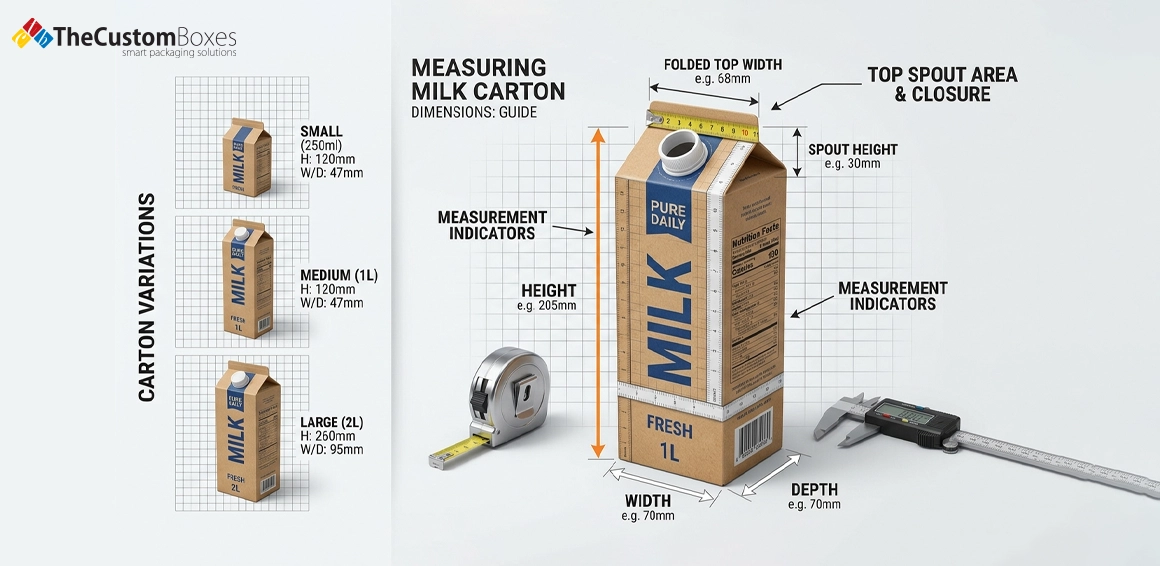
Are you sure you are measuring a milk carton the right way? If not then, the best guide is based on real, everyday wow experience. Set the milk carton on flat surface. Measure the height from bottom to top perfectly. Next, measure the width across the front. Then measure the depth from front to back.
TheCustomBoxes designs and guides for measuring milk carton size and dimensions. Dairy brands must provide fresh, safe products to gain trust. High-quality milk from local Aussie farms ensures healthy, reliable standards.
Packaging suppliers need durable materials. Green-friendly bottles save the environment. Also, keep dairy fresh during transport and storage. Retailers should stock local brands at fair prices. Clear labelling and cold fridges show expertise and keep customers very happy. In this amazing article, we are going to discuss a detailed guide on measuring milk carton size and dimensions.
What Is A Milk Carton?
A milk carton is a waterproof paper box that keeps milk fresh. Also, comfortable to drink. It is made with durable paperboard with thicker coating to maintain quality and stop leaks. These containers protect against light, fit easily in the fridge, and usually go in your yellow recycling bin.
Common Uses In The Dairy Industry
Aussie dairy companies use cartons for many products.
- They pack fresh milk and thick cream for refrigerators.
- They also store custard and long-life milk for pantry shelves.
They are easy to stack, move, and sell in local supermarkets. They keep our dairy fresh.
Difference Between Milk Cartons And Plastic Milk Bottles
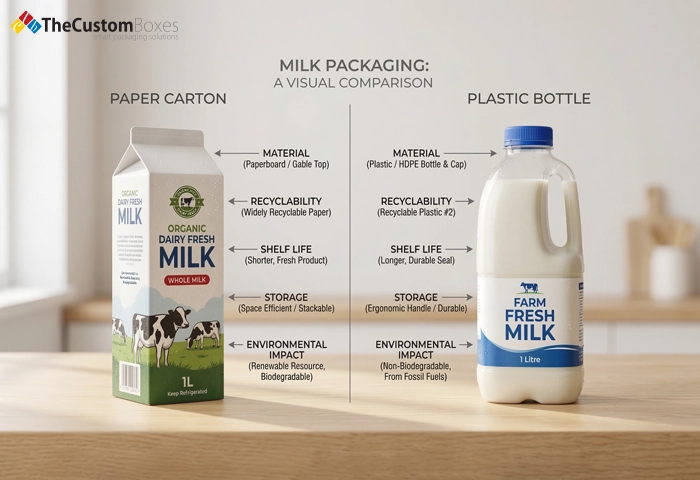
They both keep milk fresh in different ways.
- Cartons are made of paperboard and block light well.
- Plastic bottles are usually clear or white and have handy handles.
In Australia, both can be recycled in your yellow household bin.
Standard Milk Carton Sizes
Milk cartons arrive in many standard volumes to suit different needs.
- Most consumer sizes are 300ml and 600ml.
- One litre or tiny 150ml cartons are typically used for every school and hotel.
- Larger Two-litre packs are very popular for families.
Typical Milk Carton Volumes
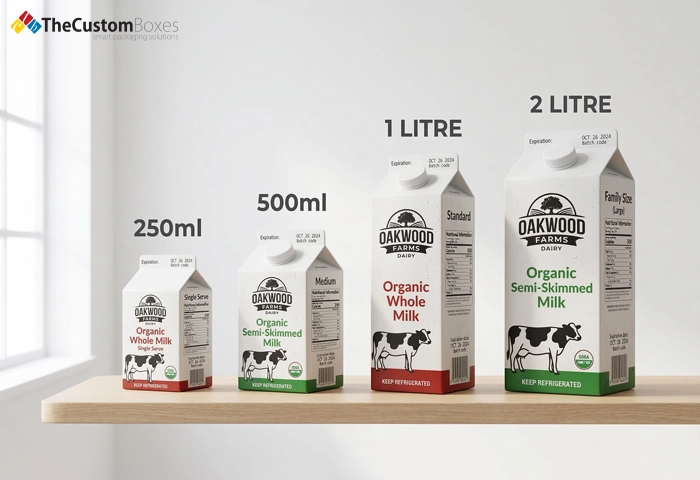
The milk cartons arrive in common sizes. Also, tiny cartons are 250mL or 500mL. Standard cartons are 1 litre. Family cartons are 2 litres. Large cartons are 3 litres. These sizes suit homes, cafes, and schools. They meet everyday needs and reduce waste for Australian families' daily use.
- 250 ML
A 250 mL milk carton is a small serve fit for schools and cafes. It is easy to carry. It reduces waste. This size is common in Australia. It follows food safety standards. It is trusted by families and suppliers. It gives one fresh milk serve per drink.
- 500 ML
A 500 mL milk carton is a medium serve. It suits one or two people. It is common in Australia. Cafes use it often. It is easy to store. It reduces waste. It meets food safety rules. It provides fresh milk for drinks and light meals.
- 1 Litre
1 litre milk carton is the standard size. It suits families and homes. It is very common in Australia. It fits most fridges. It is easy to pour. It meets food safety rules. It offers good value. It keeps milk fresh for daily use.
- 2 Litre
2-litre milk carton is family size. It suits busy homes. It is common in Australia. It offers good value. It lasts several days. It fits large fridges. It is easy to pour. It meets food safety rules. It keeps milk fresh for regular daily use.


How Carton Size Varies By Brand And Retailer
Carton sizes can vary by brand. Some brands offer more size choices. Retailers choose sizes that sell best. All cartons meet Australian food rules. Brands follow industry standards. Retailers use trusted suppliers to ensure quality and safety.
Understanding Milk Carton Dimensions
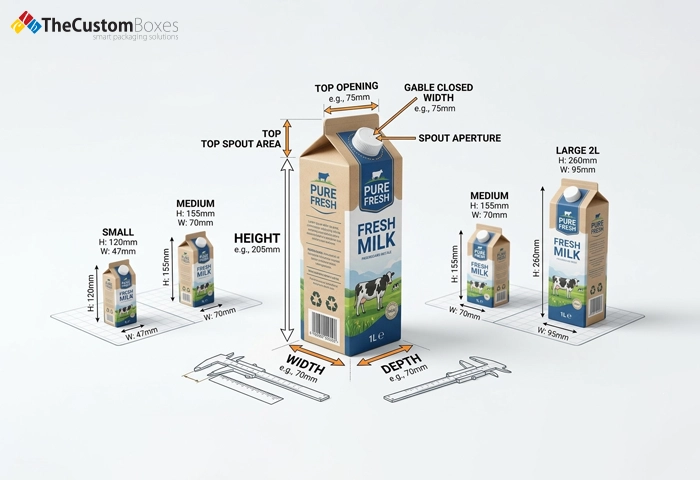
Milk carton dimensions affect storage and use. Sizes change with volume. Taller cartons hold more milk. Smaller cartons fit lunch boxes. All cartons follow Australian packaging rules. Brands test designs for strength. Retailers trust approved suppliers. Good design helps safe transport, easy pouring, and freshness for daily Australian use.
- Length is the longest side of the base.
- Width is the shorter side of the base.
- Height means from the bottom to the top of a tall carton. These measures help you to check if a carton is set on your showcase.
How To Measure Milk Carton Size Correctly
To measure a milk carton perfectly, you need some tools and information about how to measure a carton.
Tools Required For Accurate Measurement
Accurate measurement needs the right tools.
- Use a ruler for length.
- A tape measure works for bigger items.
- Calipers check small parts.
- A measuring jug is for liquids.
- A scale measures weight.
- A level ensures straight lines.
Brands follow standards. Using proper tools keeps measurements correct and safe.
Step-By-Step Guide To Measuring Length, Width, And Height
Best grab your tape measure and first start at the zero mark. As for length, measure the longest side. For width, measure the shorter side across. Get the height, measure from the bottom to the top.
- Measuring Cartons With Spouts Or Caps
Measuring cartons with spouts and caps is easy. Put the carton on a flat surface. Read the label perfectly. Open the spout or cap fully. Pour slowly into a clear measuring jug. Stop at the correct line. Close the cap tightly. This method is safe, accurate, and trusted by trained Australian workers.
- Measuring Flat Vs Assembled Cartons
Measuring flat cartons is easy. Place the carton flat on a clean area. Measure length and width. Assembled cartons need more steps. This method is secure, accurate, and trusted by experienced Australian packaging masters.
Types Of Milk Cartons And Their Dimensions
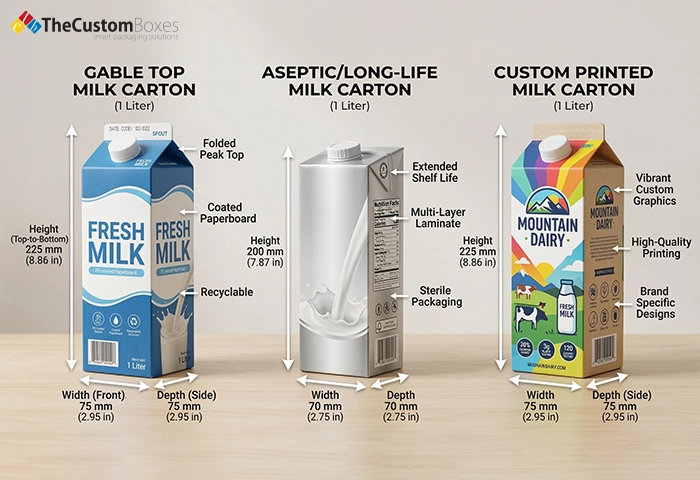
Milk cartons arrive in different kinds. As 250 mL (500 mL) or one litre, two litres. They may be square and rectangular. Dimensions are printed on cartons. Measuring helps with storage and packing. This information is accurate and trusted by Australian dairy and packaging professionals.
- Gable Top Milk Cartons
To measure a gable-top milk carton, start at the end. Measure the length or width of the bottom perfectly. As for the height, measure from the base all the way to the top of the caps. Some common sizes of them are 250 ml, 500 ml, and 1 liter, typically around 70 × 70 × 200 mm.
- Aseptic Or Long-Life Milk Cartons
Aseptic or long-life cartons are brick-shaped. To measure, start at zero. For length, measure the longest bottom side. Available sizes for these milk cartons are 200 ml, 250 ml, 500 ml, and 1 liter, with approx. 70 × 70 × 230 mm.
- Custom Printed Milk Cartons
Custom-printed milk cartons make your brand fantastic. We use higher-quality, food-safe materials to keep milk fresh. Many Aussie businesses trust our designs for promotions and events. The dimensions vary based on your needs, but standard options range from 100 ml to 1 liter, fully customizable in height, width, and shape.
Standard Milk Carton Dimensions
In Australia, milk cartons follow standard metric sizes so they fit perfectly in fridge doors and milk crates. Here are the common dimensions used by local dairies.
|
Size |
Style |
Width (mm) |
Length (mm) |
Height (mm) |
|
300ml |
Small Gable Top |
60 |
60 |
115 |
|
600ml |
Standard Gable Top |
70 |
70 |
165 |
|
1 Litre |
Tall Gable Top |
70 |
70 |
235 |
|
1 Litre |
Aseptic (Long Life) |
60 |
90 |
210 |
|
2 Litre |
Family Gable Top |
95 |
95 |
280 |
Carton Size Quantity of Milk Approximate Dimensions
Milk cartons arrive in many sizes. The small one holds 200mL 3×2×2 in. Also, medium size is 300 mL, 4× 2.5× 2.5 in. As standard, 500 mL or inches 5×2.5×2.5. 1 L( 6× 3× 3) large.
- Pint
Pint milk cartons can hold 16 oz, 473mL. Also, great dimensions are (2.75″× 2.75″× 4″). It's made from the highest quality materials. It keeps milk fresh and trusted by Aussie businesses for hygiene. This is best for daily use.
- Half Pint
This holds 8 oz, 237 ML. Also, it measures 2.8″×2.8″×4″ greatly. It is made from safe materials. Aussie businesses are satisfied with higher quality. Also reliable for everyday use.
- Quart
This holds (32,oz,946) ML. Also, size is (3.6″×3.6″×8.3″). It's made from the best higher quality materials.
- Gallon
It holds 128 oz (3.78 liters) greatly. Durable and comfortable to carry and store. So, it measures 7.5 inches wide. Also, 4.5 inches deep or 8 inches high. Great for water or cleaning liquids. Best for home and work use. Suitable for garages and outdoor jobs across Australia.
- Half Gallon
These milk cartons hold 64 oz (1.89 L). Its dimensions are 6″×4″×8″. This is designed from food-safe, wow, higher-quality materials. So, it keeps milk fresh or is trusted by Aussie brands for reliability or everyday use.
Why Accurate Milk Carton Dimensions Matter
Accurate milk carton dimensions matter for storage and shelf display. Correct sizes prevent spills, fit fridges, and reduce waste. Using precise measurements ensures quality, safety, and reliability, making your milk trusted by businesses and customers across Australia.
Choosing the right carton size saves money. Smaller cartons use less cardboard. Also, ink, cutting your production price. Using less material is also better for the Aussie environment.
It’s a win-win for your wallet and nature. Retail shelf fitting and display standards ensure products fit neatly and look appealing. Following these standards keeps stores organised and professional for shoppers.
Choosing The Right Milk Carton Size For Your Product
Choosing the right milk carton size helps meet users' needs. Small, medium, or large cartons suit different uses. Accurate sizes keep milk fresh, fit storage, and ensure safety, quality, and trust for Aussie businesses and shoppers.
- Factors To Consider
When choosing a carton, think about your product weight and storage. Heavy items need thicker cardboard for strength. Consider if it needs to be waterproof for the fridge. Always check that the dimensions fit standard Aussie shipping crates to save on freight.
- Product Volume
Product volume is the total space inside. Different length, width, and height. Accurate volume prevents leaks and saves on shipping.
- Target Market
Know your target market. Design sizes that fit your customers' fridge doors and hands. Australian families prefer easy-to-pour, sturdy cartons.
- Storage And Shipping Needs
Plan your storage and shipping early. Use standard sizes to fit Australian pallets and milk crates perfectly. This stops damage, dust from getting under the air intake. These boxes are very durable and smart in size.
Role Of TheCustomBoxes In Custom Sizing
Reliable packaging supplier TheCustomBoxes AU helps create custom milk carton sizes to fit your needs. They give safe, best-quality materials, accurate measurements, and designs.
Common Measurement Errors To Avoid
Common measurement errors include adding the wrong height, width, or depth and rounding incorrectly. These mistakes affect storage, transport, and shelf display. Using accurate dimensions ensures milk cartons fit properly, stay fresh, and meet safety and quality standards for Aussie businesses.
Measuring internal instead of external dimensions can cause fitting problems. Accurate measurements ensure milk cartons are stored, transported, and displayed correctly.
Not accounting for the spout height or sealing area can cause leaks and fitting problems. Correct measurements ensure milk cartons close properly, stay fresh, and are safe. Accurate design keeps products reliable and trusted by Aussie businesses and customers.
Conclusion
Accurately measuring milk carton size and dimensions is essential for every business. It ensures cartons fit shelves and fridges. Our correct measurements prevent leaks. Businesses that follow proper sizing also maintain a professional appearance and meet retail standards.
Considering spout height, sealing areas, and internal versus external dimensions avoids common errors. Using food-safe, high-quality materials with precise dimensions builds trust with customers.
Reliable packaging supports storage and makes operations smoother. So, careful measurement and attention to detail help Aussie businesses deliver consistently.
Also, safe and high-quality milk items that shoppers may depend on every day. The Custom Boxes help with the best guide to ensure consistency and reduce waste. Also support better decisions across Australian dairies and suppliers' nationwide food supply chains.
Frequently Asked Questions
-
What Are The Measurements Of A Milk Carton?
A 1 litre milk carton is about 23 cm tall. The base is about 7 cm wide. It is about 7 cm deep. Sizes can change a little by brand.
-
How To Check Carton Box Dimensions?
Use a ruler or tape measure. Measure the length of the box. Measure the width and the height. Write the numbers in centimetres.
-
How Do You Calculate The Size Of A Carton?
Measure the length, width, and height of the carton. Multiply length × width × height to get the size. Use centimetres or metres, depending on what you need.
-
How To Calculate The Dimensions Of The Box?
Measure the length, width, and height of the carton. Multiply the three numbers together. This gives you the carton size.
-
What Does D * W * H Mean?
These letters show the three measurements needed for a box. D is the depth, W is the width, and H is the height. Multiply them together to find the total volume or space inside.
-
What Do The Numbers On A Milk Carton Mean?
One set of numbers is the sell-by date, which tells the store when to take the milk off the shelf. Another set is the plant code, where the first two digits show the state where the milk was bottled. The rest of that code identifies the specific dairy plant that processed and packaged your milk.
-
What Does 10x12 Mean?
In math, 10x12 means you multiply ten by twelve to get 120. In construction, it describes a space that is 10 feet wide and 12 feet long. This size is common for a small bedroom or a standard backyard storage shed.
-
Which Goes First, Width Or Length?
In Australia, width usually comes first. This is the rule for windows and doors. Length or height then follows. Always double-check your measurements before buying.
-
What Is The Milk Carton Rule?
The milk carton rule is about dating. Do not date someone too young. If they could be on a missing kid milk carton, it’s wrong. It’s about safety and common sense.
-
What Is The Formula For Carton Box?
A carton box is rectangular in shape. Volume equals length times width times height. The formula for volume is V = L × W × H. The surface area is calculated as 2(LW + LH + WH).
Premier American Manufacturer of Packaging and Custom Boxes
Experience the ease of creating and ordering custom boxes and affordable packaging online with the Custom Boxes. Contact us today to discover how we can turn your packaging vision into a reality.

Payment & Security
 No Hidden Charges
 Money Back Guarantee
thecustomboxes.com.au online guarantee the privacy of all the customers and never share their personal information with third parties. For more details read our Privacy Policy.


